
The Servant Crushed
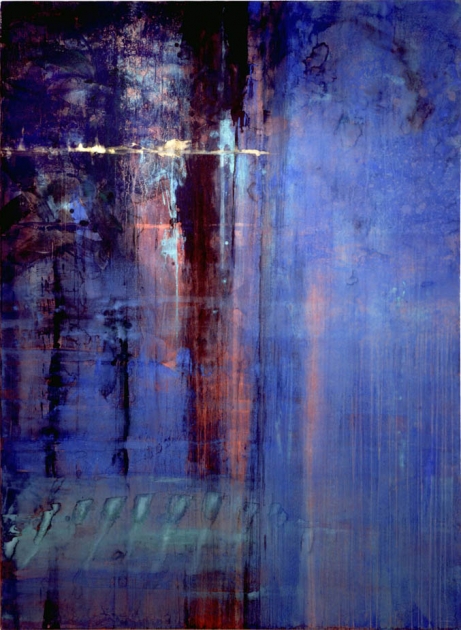
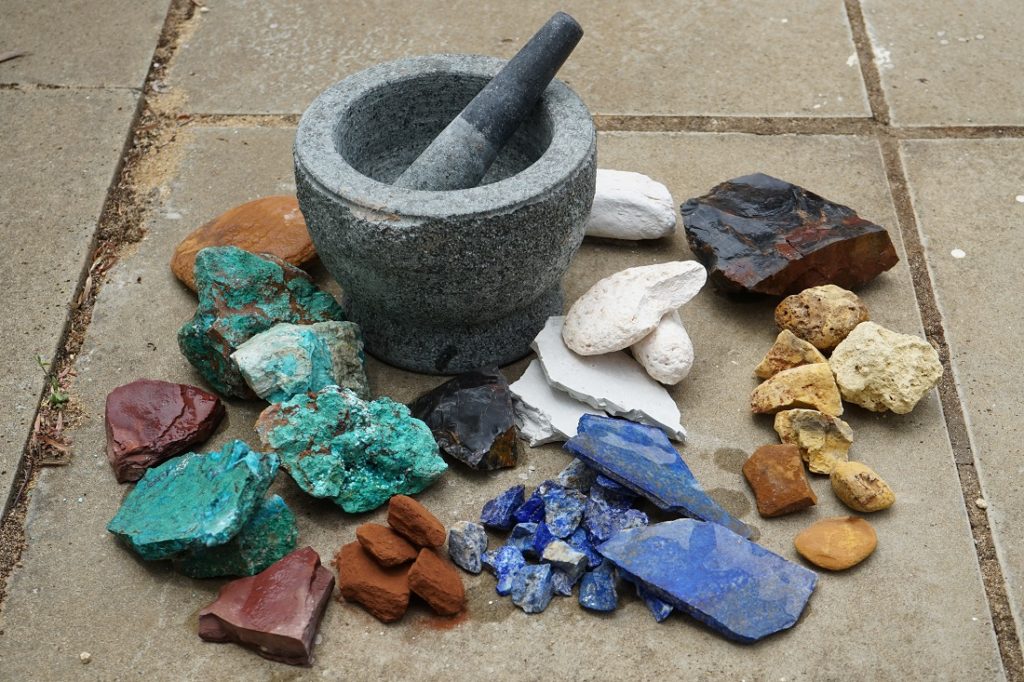
Sacrificial Grace, by Makoto Fujimura. Fujimura uses a Japanese style of painting called Nihonga, in which semi-precious stone such as lapis lazuli is crushed into mineral pigments. It is the breaking and crushing of the stone which brings out the splendor of the colors shimmering in refracted light. This piece is a visual testament of the determination of Christ to be crushed and broken to bring us peace and healing.
The Servant Songs in the book of Isaiah (Isaiah 42:1-4; 49:1-6; 50:4-9; and 52:13-53:12) are a source of rich treasure that will “stand forever” as the voice of the Spirit speaks for all time. Isaiah is the good news of the Old Testament as the prophet proclaims salvation through the sacrifice of the Servant, One crushed to bring us salvation, peace, and healing.
Behold, my servant shall act wisely (accomplish his purpose); he shall be high and lifted up, and shall be exalted.As many were astonished at you—his appearance was so marred, beyond human semblance, and his form beyond that of the children of mankind—so shall he “startle” many nations. Kings shall shut their mouths because of him, for that which has not been told them they see, and that which they have not heard they understand.
Who has believed what he has heard from us? And to whom has the arm of the Lord been revealed? For he grew up before him like a young plant, and like a root out of dry ground; he had no form or majesty that we should look at him, and no beauty that we should desire him. He was despised and rejected by men, a man of sorrows and acquainted with grief; and as one from whom men hide their faces he was despised, and we esteemed him not. Surely, he has borne our griefs and carried our sorrows; yet we esteemed him stricken, smitten by God, and afflicted. But he was pierced for our transgressions; he was crushed for our iniquities; upon him was the chastisement that brought us peace, and with his wounds we are healed.
Isaiah 52:13-15, 53:1-4
Behold My Servant. With the same opening words as the first Servant song (42:1), Isaiah calls us to behold, to gaze, to contemplate the one called “The Servant.” (52:13) We have been challenged to open our eyes and ears to see God’s purpose to redeem us from sin fully accomplished in the substitutionary sacrifice of the Servant.
Exalted. The Servant has acted wisely, or accomplished his purpose, as Jesus says to the Father: “I glorified you on earth, having accomplished the work that you gave me to do.” (John 17:4) As a result the Servant will be exalted, lifted high for all to behold God’s glory. This song in Philippians 2 so beautifully describes the Exaltation of Jesus:
Christ Jesus emptied himself, by taking the form of a servant, being born in the likeness of men. And being found in human form, he humbled himself by becoming obedient to the point of death, even death on a cross. Therefore, God has highly exalted him and bestowed on him the name that is above every name, so that at the name of Jesus every knee should bow.
The Arm of the Lord. In Isaiah final Servant song the focus is on the great contrast between the Servant’s exaltation and his humiliation and suffering. The truth now seen is that the arm of God is not the expected mighty overwhelming weapon that crushes the enemy. The power to take on the sin of the world is instead the suffering, humiliation and crushing of the Servant, as the sacrificial Lamb of God. As in 50:4-9, the Servant suffers undeservedly because of human sin, but as the delivering arm of the Lord, he will restore us to fellowship with God.
Crushed. To make the crushing sacrifice of the Servant more personal, look at the contrast between him and us in verses 4-5 brought out in the Message Bible:
He suffered, but it was we who sinned.Our grief…he carried. Our pain…he bore. He was pierced…for our rebellion. He was crushed…for our iniquity. Our punishment..was on him. His welts…healed us.
PRAY. Read these verses aloud as a personal prayer:
Lord Jesus, you suffered, but it was I who sinned. My grief, you carried, my pain, you bore. You were pierced for my rebellion. You were crushed for my iniquity, my punishment was on you. Your welts healed me. Lord, it was my sins that did that to you, that ripped and tore and crushed you—my sins! You took the punishment, and that made me whole.
This Servant Song is one which you may want more time to sit alone with, praying for the Spirit to bring to your attention the truth and healing you need.
IMAGINE. Visio Divina. “Sacred seeing” is an ancient form of Christian prayer in which we allow our hearts and imaginations to enter into an image or work of art. Spend time looking at Fujimura’s Sacrificial Grace, and visualize the crushing of the precious stone that becomes the pigment which light transforms into beauty. Imagine a stone mortar or a molcajete that prepares spices by crushing and grinding them into a fine powder. Take a moment to see this process using all your senses. See the light coming through the broken stones. Smell the spice released in the crushing of seeds. See Jesus offering brokenness to bring healing. Sit in silence with the paintings and images.
What emotions are stirred up? Offer any prayers or praise that come to you.
PRAISE. Salt of the Sound, Lamb of God.
PRAISE. O Sacred Head Now Wounded, from a poem attributed to Bernard of Clairvaux

 robbijames